
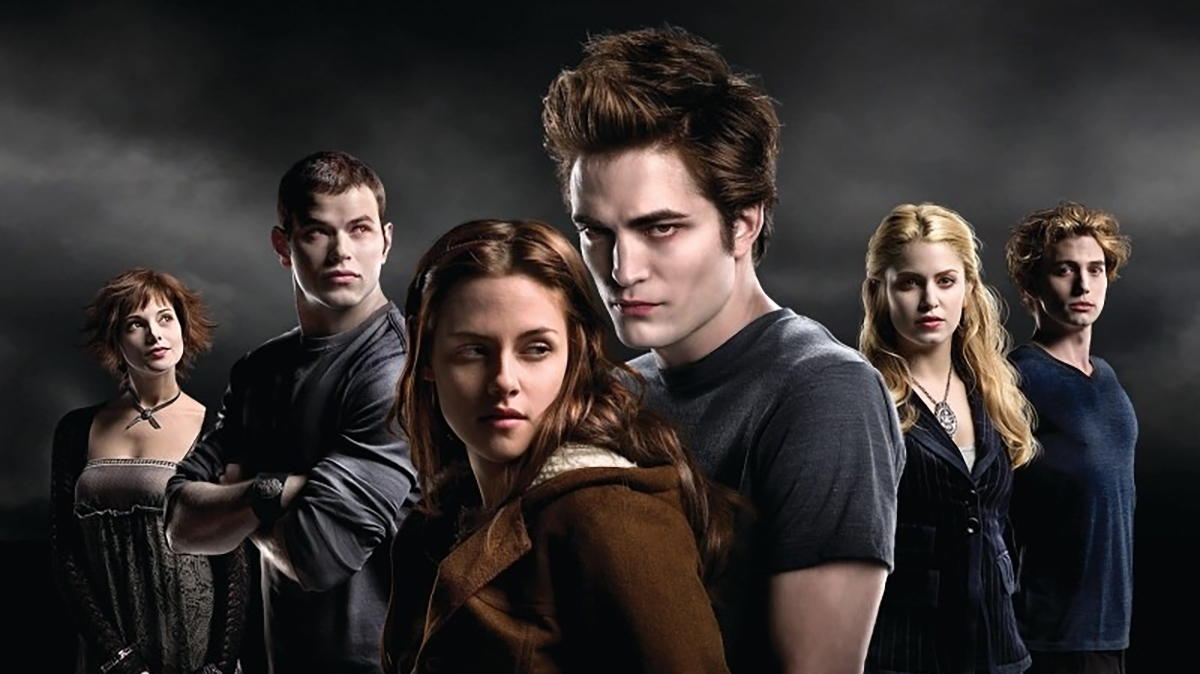
With Netflix committing to two seasons of Midnight Sun, a Twilight animated series told from Edward Cullen’s perspective, we revisit the creation of the 2008 film through the recollections of Stephenie Meyer, Robert Pattinson, Kristen Stewart, Catherine Hardwicke and the filmmakers who brought the vampire phenomenon to the screen.
Nearly two decades after Robert Pattinson and Kristen Stewart first brought Edward Cullen and Bella Swan to the screen, Twilight is preparing for another beginning. This time, however, the story will unfold through the eyes of the vampire rather than the teenage girl who falls in love with him.
Netflix’s animated adaptation of Stephenie Meyer’s 2020 novel Midnight Sun has received a two-season commitment, a development confirmed by Lionsgate Television Group chairman Kevin Beggs during the company’s November 5, 2026, earnings call. The series, originally announced in 2024, will revisit the events of the first Twilight novel from Edward’s perspective, offering audiences access to the thoughts, memories and emotional conflicts that Bella could only begin to understand. Beggs described the project as a two-season adult animation order, emphasizing Meyer’s close involvement in its development. Sinead Daly serves as showrunner, with Lynn Wang attached as supervising director. No premiere date has been announced.

For anyone who remembers the original Twilight phenomenon, the prospect of returning to Forks, Washington, is intriguing enough. But the decision to tell the story through Edward’s eyes also invites a look back at the people who first brought Meyer’s characters to life — and the considerable effort involved in translating a literary sensation into a motion picture.
When Twilight arrived in theaters in November 2008, its success seemed almost inevitable. The novels already commanded an extraordinarily devoted readership, and the casting of Pattinson and Stewart had generated enormous interest long before audiences saw the finished film. Yet the movie’s journey began before most readers had even heard of Bella Swan or Edward Cullen.
Discovering a Vampire Love Story
Producer Greg Mooradian of Maverick Films was among the first people in Hollywood to recognize the possibilities of Twilight, having encountered Meyer’s manuscript early on. “I read a lot of manuscripts prior to their being published,” he recalled. “When this one came across my desk, I just couldn’t put it down.”
What impressed Mooradian wasn’t simply the novelty of a teenage girl falling in love with a vampire. It was the emotional foundation of the relationship, which he believed would resonate even with audiences who had little interest in supernatural fiction. “Vampirism in this story is simply a metaphor for teenage lust, for that feeling of ‘I want you, but I can’t have you,'” he explained.
Meyer herself had never anticipated the phenomenon her debut novel would become, the idea originating in a dream. “When I woke up, I wanted to know happened next,” she recalled. “That first day I wrote 10 pages. When I finished it, no one was more shocked than me that I had actually finished a book.”
Hollywood came calling even before publication, something Meyer found almost impossible to comprehend. As her readership expanded, however, so did her concerns about what a film adaptation might do to the characters. “All of us have seen books ruined as movies, and I had a lot of things that I wanted to protect,” she said.
Her requirements were straightforward: characters who survived in the novel had to survive in the movie, and the Cullen family had to retain its members, names and essential personalities. She wasn’t opposed to the changes necessary to translate a book into a film, but she wanted its foundations preserved. Mooradian remembered one particularly revealing example. The filmmakers had altered the wording of Bella’s famous observation about the lion falling in love with the lamb. Meyer asked that the original wording be restored, explaining how much the line meant to readers. The producers took the request seriously. They were beginning to understand that Twilight wasn’t simply a bestselling novel. For many fans, its dialogue, characters and emotional moments had become intensely personal.
Finding the Right Director

To bring that world to the screen, the producers turned to Catherine Hardwicke, whose previous films included Thirteen and Lords of Dogtown. Her experience directing stories about young people, emotional turmoil and complicated relationships made her a particularly appealing choice. Hardwicke was immediately attracted to the intensity of Meyer’s central romance. “When I read the book, I was swept away with the whole obsession — that ecstasy,” she said.
For Hardwicke, the challenge wasn’t merely to photograph vampires moving through forests or performing impossible physical feats. It was to capture the overwhelming emotions of first love, particularly the notion of loving someone so completely that surrendering one’s humanity might seem like a reasonable price.
Screenwriter Melissa Rosenberg approached the material with a similar understanding. Having written for television series including Party of Five, The O.C. and Dexter, she was comfortable moving between teenage relationships and darker subject matter. “Twilight is really the marriage of both my love of writing for teens and the sort of gothic-ness of horror,” Rosenberg explained. “When they called me, all they had to say was teens and vampires and I was there.”
She also understood that the film would be judged by readers who had already created their own versions of Bella, Edward and the Cullens. That expectation would become particularly challenging when it came time to choose the actors.
Casting Bella Swan and Edward Cullen

For a film whose success depended so heavily on the relationship between two characters, finding the right Bella and Edward was crucial. Mooradian recalled the extraordinary degree to which readers had already imagined their ideal cast. Fan websites were filled with suggestions, comparisons and arguments over which actors should play which characters. The filmmakers knew they couldn’t satisfy everyone. Ultimately, they would have to trust their instincts.
Kristen Stewart, who was only 17 when the movie was filmed, had already built an impressive résumé, appearing in Panic Room, Cold Creek Manor and Into the Wild. Meyer was struck by the actress’s combination of experience and vulnerability. “Kristen has an amazing number of movies already under her belt,” Meyer observed. “Bella has a lot of drama going on.”
Stewart, interestingly, hadn’t been familiar with the books before becoming involved with the movie. Once she began investigating the material, she discovered just how widespread the phenomenon had become. “Suddenly, everywhere I looked, there was something about Twilight,” she recalled. “I was, like, how did I miss this? Everybody I knew had read it.”
Finding Edward proved more complicated.Meyer had created a character who needed to be impossibly attractive without losing the danger inherent in his vampire nature. He also had to convey intelligence, anguish and the accumulated emotional burden of an existence stretching back nearly a century. “He has to be everything,” Meyer explained. “He has to be beautiful and dangerous and angst-ridden and intelligent.”
Robert Pattinson, best known at the time for playing Cedric Diggory in the Harry Potter films, ultimately convinced the filmmakers that he could embody those contradictions. “Rob Pattinson has both sides,” Meyer said.
The chemistry between Pattinson and Stewart helped seal the decision. Producer Wyck Godfrey recalled that watching the actors audition together made it clear that the filmmakers had found the combination they needed. But Pattinson’s interpretation of Edward went considerably deeper than the character’s brooding exterior.
Robert Pattinson on Edward’s Inner Life
Of all the observations made during the original production, Pattinson’s comments about Edward Cullen seem especially relevant now that Midnight Sun is headed to Netflix.
The actor didn’t approach Edward as simply a romantic fantasy or an impossibly handsome supernatural boyfriend. He saw a deeply unhappy individual whose existence had become almost unbearable. “He’s spent his entire life fixated on wanting to be human or die,” Pattinson explained.
Bella’s arrival, he believed, destroyed the fragile emotional balance Edward had managed to establish. Suddenly, the vampire who had spent decades keeping himself apart from ordinary human life found himself drawn toward someone whose very presence threatened his self-control. “He initially starts the relationship to test himself,” Pattinson continued. “But when he gets to know her realizes this girl has reawakened him to some kind of life.”
It’s an observation that takes on added significance with Midnight Sun. The original Twilight largely presented Edward as Bella experienced him: mysterious, sometimes frightening, frequently frustrating and ultimately irresistible. The new adaptation has an opportunity to explore the experiences and conflicts behind that behavior.
Pattinson also recognized the pressure of interpreting a character who already belonged, in a sense, to millions of readers. Everyone who had read the novel possessed an idea of who Edward was supposed to be. The actor’s challenge was to honor that character while finding something personal and believable in the performance. That tension between fidelity to the source and the need to create a compelling screen character ran throughout the production.
Reinventing the Vampire
One of the more surprising aspects of Twilight was that its creator hadn’t approached the project as a devoted student of vampire fiction. “I’ve never been into horror,” Meyer acknowledged. “I haven’t read vampire books or watched vampire movies.”
Rather than building her mythology around existing screen traditions, she developed rules that served the relationship she wanted to explore. Her vampires could see their reflections. Sunlight wouldn’t reduce them to ashes, although it could expose their supernatural nature. They didn’t possess the traditional protruding fangs, and they had no need to sleep in coffins. Most significantly, the Cullen family had chosen to reject human blood, surviving instead on animals. The latter created a central moral conflict. Edward’s danger to Bella wasn’t theoretical; his attraction to her existed alongside an instinctive desire to kill her. His determination to resist that impulse became inseparable from the romance.
Peter Facinelli, who played Cullen patriarch Carlisle, explained that his character had developed the family’s alternative approach to feeding after being transformed into a vampire himself. The arrangement allowed the Cullens to live among humans, although it required constant discipline.
For the actors playing the nomadic vampires James, Victoria and Laurent, the rules were very different. These characters continued to regard humans as prey, providing a contrast with the Cullens’ self-imposed restrictions. Rachelle Lefevre, who played Victoria, was particularly fascinated by the idea of immortality and the cost of living forever. She even wrote Hardwicke a three-page handwritten letter explaining her interest in the character and the mythology. For Lefevre, immortality wasn’t necessarily a gift. When time becomes limitless, she suggested, the ordinary experiences that make human existence meaningful can lose their value.
The film’s vampire mythology also influenced its visual identity. Costume designer Wendy Chuck rejected the familiar Gothic wardrobe of black leather, elaborate chokers and overtly sinister clothing. The Cullens needed to appear unusual without advertising themselves as creatures of the night. Instead, Chuck developed a palette of pale colors, grays, silvers and blues, creating an almost frozen quality that reflected the characters’ unchanging existence. Their clothing was elegant and distinctive, but still plausible within the everyday world of Forks. Edward’s wardrobe incorporated subtle references to the era in which he had originally lived, while Bella’s clothing gradually shifted as she became more involved with the Cullen family.
The effect was a vampire world that felt contemporary without completely abandoning the supernatural qualities that made its inhabitants different.
Returning to Edward Cullen’s World
The original Twilight opened in November 2008 and launched a five-film franchise that continued through The Twilight Saga: Breaking Dawn – Part 2 in 2012. Along the way, Pattinson and Stewart became international stars, and Meyer’s particular interpretation of vampire mythology established itself as one of the most recognizable versions of the creatures in contemporary popular culture. Now Midnight Sun offers the franchise an opportunity to revisit its beginnings without simply remaking the original movie.
Animation provides a different storytelling vocabulary, potentially allowing Edward’s supernatural perceptions, memories and ability to hear other people’s thoughts to become part of the visual narrative. Whether the series will take full advantage of those possibilities remains to be seen. But what makes the project especially interesting is the opportunity to return to the character Pattinson described during the original production: a vampire trapped between the desire to recover his humanity and the conviction that he has lost it forever.
Bella Swan changed Edward Cullen’s existence. In 2008, audiences largely experienced that transformation through her eyes. With Midnight Sun, they will finally have the opportunity to experience it through his. And nearly two decades after the original movie, that may be enough to make an old love story feel new again.
This article draws on original interviews conducted during the making of Twilight, together with material from Summit Entertainment’s original production notes.
Tags: Twilight