
There have been plenty of interpretations of Count Dracula over the years, from Bela Lugosi‘s hypnotic aristocrat to Christopher Lee’s bloodthirsty predator and Gary Oldman’s tragic romantic figure. But for director Mary Lambert, the vampire’s greatest terror isn’t necessarily his fangs, his thirst for blood or even his supernatural abilities but rather the absolute power he believes he has over everyone around him.
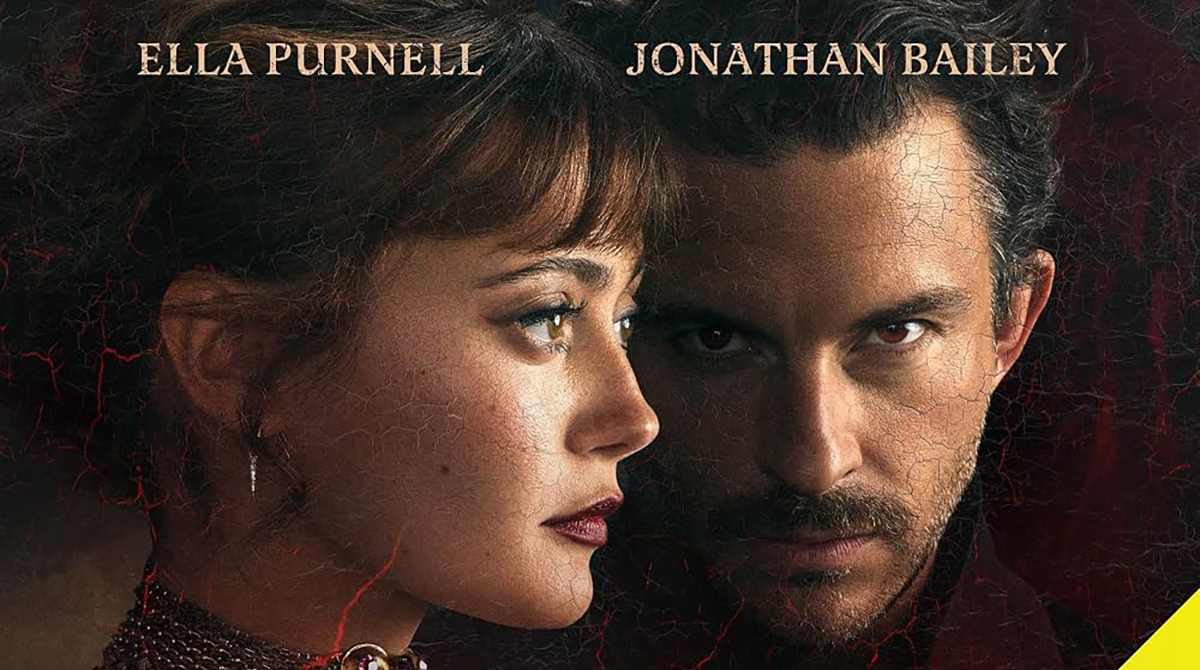
That’s the approach Lambert has taken with Bram Stoker’s Dracula, a new full-cast Audible production starring Bridgerton and Wicked actor Jonathan Bailey as the legendary vampire, Ella Purnell as Mina Murray and Maggie Gyllenhaal as Professor Van Helsing. Released October 1, 2026, the adaptation brings together an impressive ensemble for a psychological battle in which Dracula’s seductive power is matched against the determination of a young woman who refuses to surrender to him. And Lambert, whose directing credits include the original Pet Sematary and some of Madonna’s most memorable music videos, believes Bailey has brought something particularly unsettling to the role.
Jonathan Bailey’s Dracula is a different kind of monster
Speaking in an October 12 interview with Sampadak Express, Lambert described Bailey’s interpretation as a reflection of the kind of power that can frighten people in the real world.
MARY LAMBERT: “The horror that Bailey brings to the character is of someone who has absolute control and power over your life and soul. They can destroy nature, your job or your family. Jonathan brought that metaphor to Dracula. When he tells you what he is going to do, he does not act like a monster. The monster is within and you will feel it when you hear his performance.”
“When I dived back into the material and Robyn’s [Ahern, writer] script, the book’s complexity was fascinating. It is not just about Dracula and sucking people’s blood. There is a very human love story between Mina, her husband and her best friend. Lucy and Mina have an almost erotic love for each other that is restrained because of society.”
JONATHAN BAILEY: “When I think about the original, in the late Victorian era, it was so visceral — the sense of control and expectation on everyone to limit their desires, their deepest wishes, their independence, and their identity. That is always going to be a completely modern story. Because in every iteration, over every decade, there’s just enough space to project your own alchemical sense of a knife-edge life onto Dracula.
“Shame is something we all feel, no matter your identity, and some feel it much more than others, depending on where you live and which stories you’re told. I always feel like you want to communicate to people’s deepest shame as intimately as you can, so people feel shameless and empowered by it. And so to be in people’s ears and hopefully terrify, seduce, but also transport them into a world where they can get lost in it — in the way that all the other incredible performers do — is thrilling. Dracula is many things, and one of them is this ominous manifestation of our cultural shame.” (Bustle)
“With a character like Dracula, every inflection matters. You’re building an entire world through your voice, discovering the darkest corners of who he is. It’s the kind of role you dream about. I hope listeners feel that same sense of being utterly transported, and maybe slightly unnerved, when they press play.” (Broadwayworld)
Ella Purnell’s Mina isn’t waiting to be rescued
Although Bailey’s name is understandably a major attraction, this version of Dracula places considerable emphasis on Mina Murray, played by Ella Purnell of Fallout and Yellowjackets. The story begins when Mina’s fiancé, Jonathan Harker, disappears in Transylvania. As she gathers letters, diaries and testimony to understand what has happened, she discovers the existence of a terrifying predator who is already moving against the people she loves. When her friend Lucy falls under Dracula’s influence, Mina becomes increasingly determined to stop him.
Lambert emphasizes that Mina’s intelligence and investigative abilities are central to the adaptation. Rather than simply becoming the object of Dracula’s obsession, she helps assemble the evidence that allows the other characters to recognize the threat they’re facing. Purnell was particularly enthusiastic about this aspect of the character. “What I love about this version is that it gives her real agency and puts her at the heart of the story,” she said.
The relationship between Mina and Dracula becomes a battle of wills, with the vampire attempting to exert psychological and supernatural control over her. For Lambert, that conflict also contains an unmistakable element of sexuality, but the danger goes beyond physical possession. Dracula wants something more fundamental: Mina’s very identity and soul.
Maggie Gyllenhaal Reinvents Van Helsing
Another significant departure from traditional adaptations is the casting of Maggie Gyllenhaal as Professor Van Helsing, the scholar and vampire hunter who helps the protagonists understand what they’re fighting. In Bram Stoker’s original novel, Abraham Van Helsing is a man, and most screen versions have followed that tradition. Lambert’s production makes the character a woman, but the director argues that the change fits naturally with Van Helsing’s unusual combination of scientific knowledge and spiritual understanding.
MARY LAMBERT: “Van Helsing comes in with a very radical idea, which is that there has to be a balance between science and spirituality. Dr. Seward is the scientist, and Van Helsing is also a doctor. She’s a psychiatrist, but she knows that you can’t just heal a person physically. You have to heal them spiritually and mentally, or they will not get well. That is why we need more women in positions of power. Women understand that there are spiritual mysteries that we can’t necessarily solve with science or machinery, and so I wanted to represent that element of a story through a woman.”
MAGGIE GYLLENHAAL: “If anyone is going to play Van Helsing, they’re going to have their own take on it. I think it fit quite easily into being played by a woman. He’s a character who is in the book, kind of an iconoclast, very, very smart, but outside the box and interested in incorporating the unconscious and the irrational into his thinking about what’s happening and does end up being correct and right, but you have to take a leap of faith to get on his train. And that all seems very feminine to me, being outside the box, not fitting quite into the generally agreed way of doing things, and also incorporating the irrational and the unconscious.” (TV Insider)
A cast worth sinking your teeth into
Joining Bailey, Purnell and Gyllenhaal are Aimee Lou Wood as Lucy Westenra, Louis Partridge as Jonathan Harker, David Jonsson as Dr. Seward, Lesley Manville as Mrs. Westenra, Johnny Flynn as Renfield and Francis Lovehall as Arthur. The script was adapted by Robyn Ahern, with Lambert making her audio-drama directing debut.
Audible has also developed versions of the production in several languages, including French, Italian and Spanish, featuring different casts. It’s an unusually ambitious international treatment of a story that has been retold countless times since Stoker’s novel was published in 1897. And perhaps that continuing fascination is precisely the point. In her conversation with Good Housekeeping, Gyllenhaal suggested that vampire stories endure because horror allows audiences to confront aspects of themselves they might otherwise prefer to avoid. Lambert sees something equally enduring in the Dracula legend: humanity’s fascination with immortality, youth, desire and the fear of death. More than a century after Stoker introduced his infamous Count, those subjects remain as powerful as ever.
Bram Stoker’s Dracula is available now exclusively on Audible.