
DRACULA PART I: THE LITERARY LEGEND — From Bram Stoker’s Novel to Modern Vampire Canon
DRACULA PART II: THE VAMPIRE TAKES THE STAGE — Count Dracula in Theatrical History
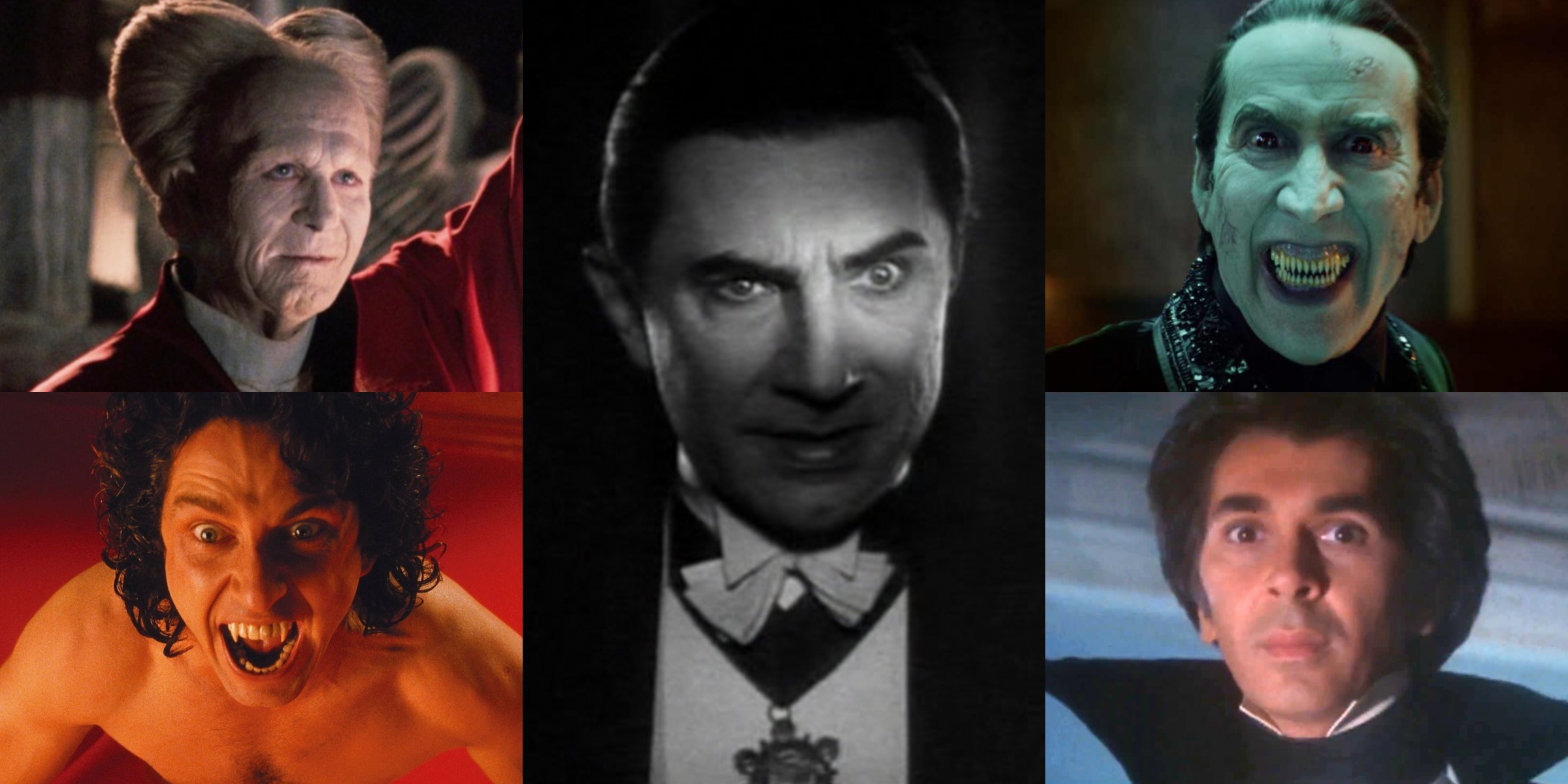
If literature gave Dracula immortality, cinema gave him form. Over more than a century of filmmaking, Count Dracula has become one of the most frequently portrayed characters in screen history, regularly cited alongside Sherlock Holmes as among the most adapted figures ever created. From Max Schreck’s rodent-like predator to Bela Lugosi’s hypnotic aristocrat, from Christopher Lee’s bloodshot menace to Gary Oldman’s tragic romantic, each generation has shaped the Count in its own image.
This chapter of Dracula’s legacy is not simply about fangs and capes. It is about technology, censorship, sexuality, nationalism, modernity, and fear. The cinematic Dracula is less a fixed character than a recurring role — one that evolves as culture evolves. Every era remakes him. Every era needs him.
Nosferatu (1922): The Unauthorized Beginning
Dracula’s first major appearance on screen came under an alias. F.W. Murnau’s Nosferatu: A Symphony of Horror (1922) was an unauthorized adaptation of Bram Stoker’s novel. Names were changed — Dracula became Count Orlok, Jonathan Harker became Hutter — but the narrative was unmistakably Stoker’s.
Max Schreck’s Orlok bore little resemblance to the suave aristocrat audiences would later recognize. Bald, rat-toothed, clawed, and corpse-thin, Orlok was pestilence incarnate. He did not seduce; he infected.
The Stoker estate successfully sued the filmmakers for copyright infringement, and a court ordered all prints destroyed. Several survived. Today, Nosferatu is regarded as the first great vampire feature film and a cornerstone of horror cinema.
Dracula’s screen life began in shadow — and in controversy.
Universal’s Dracula (1931): Bela Lugosi Creates the Template
The Count’s official Hollywood arrival came in 1931 with Universal Pictures’ Dracula, directed by Tod Browning and starring Bela Lugosi, who had previously played the role on Broadway.
Lugosi’s portrayal — controlled, deliberate, accented — defined Dracula for generations. His slicked hair, evening wear, and slow cadences established the aristocratic vampire as a figure of both dread and fascination. “I never drink… wine” entered pop culture immediately.
The film was a commercial success, helping launch Universal’s monster cycle and proving horror’s viability in the early sound era. Though visually static by modern standards, its atmosphere and Lugosi’s presence cemented Dracula as a cinematic icon.
That same year, Universal filmed a Spanish-language version on the same sets at night, directed by George Melford and starring Carlos Villarías. Many modern critics find it more visually dynamic than Browning’s version — an early example of Dracula adapting to international audiences.
The Universal Aftermath: Daughters, Sons, and Crossovers
Universal quickly expanded the mythology.
Dracula’s Daughter (1936) explored vampirism as psychological burden, centering on Countess Zaleska’s attempt to escape her curse. Its subtextual treatment of repression has earned it renewed scholarly interest.
Son of Dracula (1943), starring Lon Chaney Jr., relocated the Count to the American South and introduced more elaborate transformation effects, including on-screen bat metamorphosis within the Universal cycle.
By the time Bela Lugosi returned in Abbott and Costello Meet Frankenstein (1948), Dracula had crossed into self-aware territory. Horror and comedy were no longer mutually exclusive — a tonal flexibility that would define the character’s future.
Hammer Horror: Christopher Lee Restores the Bite
In 1958, Hammer Films resurrected Dracula in vivid color with Horror of Dracula, directed by Terence Fisher and starring Christopher Lee opposite Peter Cushing’s Van Helsing.
Lee’s Dracula was physical, violent, and overtly sexualized. Blood was bright red. Fangs were prominent. His dialogue was minimal, but his presence was ferocious.
Hammer followed with a string of sequels through the 1960s and early 1970s, including:
Dracula: Prince of Darkness (1966)
Dracula Has Risen from the Grave (1968)
Taste the Blood of Dracula (1970)
Scars of Dracula (1970)
Dracula A.D. 1972 (1972)
The Satanic Rites of Dracula (1973)
Hammer’s cycle pushed censorship boundaries with eroticism and gore, updating Dracula for the counterculture era. If Lugosi made him iconic, Lee made him dangerous again.
Romantic Reinvention: Langella and Herzog (1979)
Two radically different Draculas emerged in 1979.
John Badham’s Dracula, starring Frank Langella, emphasized tragic romance and sexual magnetism. Based on a Broadway revival, Langella’s Count was less monster than dark seducer — a being offering liberation as much as damnation.
Meanwhile, Werner Herzog’s Nosferatu the Vampyre paid homage to Murnau’s silent classic. Klaus Kinski’s performance blended grotesque physicality with profound melancholy. Herzog’s Dracula was not simply evil — he was eternal loneliness embodied.
The romantic vampire was gaining ground.
Avant-Garde and International Variations
Dracula traveled widely across global cinema.
Paul Morrissey’s Blood for Dracula (1974), produced under the Andy Warhol banner and starring Udo Kier, merged arthouse satire with sexual grotesquerie.
Pakistan’s Zinda Laash (1967), an unofficial adaptation inspired by Hammer’s style, became that country’s first horror film and integrated Islamic moral frameworks into the vampire myth.
Guy Maddin’s Dracula: Pages from a Virgin’s Diary (2002) reinterpreted Stoker through ballet and silent-film aesthetics.
Dracula was no longer confined to a single cultural lens. He adapted — as he always does.
Francis Ford Coppola’s Bram Stoker’s Dracula (1992)
Francis Ford Coppola’s lavish adaptation remains one of the most novel-inspired and visually operatic versions ever filmed.
Gary Oldman’s Dracula shifts from elderly warlord to youthful seducer to monstrous beast. Coppola foregrounded Vlad the Impaler and introduced the reincarnated-love motif, casting Mina as the Count’s lost wife reborn.
The film won Academy Awards for Costume Design, Makeup, and Sound Effects Editing. Its practical effects and theatrical style made it visually singular.
It reframed Dracula as tragic antihero — a lover damned by eternity.
Comedy, Animation, and Reinvention
Dracula has proven remarkably adaptable to satire.
Love at First Bite (1979) featured George Hamilton as a disco-era Count navigating modern New York.
Mel Brooks’ Dracula: Dead and Loving It (1995) cast Leslie Nielsen in broad parody.
The Hotel Transylvania animated franchise (2012–2022) transformed Dracula into an overprotective father voiced by Adam Sandler — proof that even a Victorian predator can become family-friendly.
Few horror icons survive tonal shifts so easily.
Action-Era Dracula
The 21st century reimagined Dracula as action figure and antihero.
Dracula Untold (2014), starring Luke Evans, portrayed Vlad as a medieval warrior seeking power to protect his people. The film was later positioned as a possible starting point for Universal’s planned “Dark Universe,” though that franchise ultimately faltered.
Renfield (2023) leaned into absurdist action-comedy, with Nicolas Cage delivering a flamboyant, gleefully theatrical Dracula opposite Nicholas Hoult.
The Last Voyage of the Demeter (2023) returned to pure horror, adapting the novel’s shipboard chapter with Javier Botet as a feral, creature-like Count closer in spirit to Orlok than Lugosi.
Luc Besson’s Dracula: A Love Tale
French filmmaker Luc Besson has entered the lineage with Dracula: A Love Tale, focusing heavily on the reincarnated-love mythology between Dracula and Mina. Besson leaned fully into the tragic-romantic interpretation, emphasizing operatic emotion and sensual fatalism. As such, it could extend the lineage Coppola amplified — Dracula not merely as monster, but as eternal lover condemned by time.
Dracula’s Enduring Screen Legacy
For more than a century, Dracula has never remained buried for long. He has been aristocrat and animal, seducer and plague, tragic lover and narcissistic tyrant. He has stalked silent shadows, Technicolor castles, disco clubs, CGI battlefields, and arthouse dreamscapes.
What makes Dracula unique is not just longevity — it is elasticity. He absorbs the anxieties of his time: immigration, sexuality, contagion, war, addiction, immortality itself. As filmmaking technology evolves, so does he.
Dracula is not a single performance. He is a recurring cultural ritual.
And as long as cinema continues to reinvent itself, Count Dracula will continue to rise — cape swirling, eyes glinting — reminding audiences that some stories are too powerful to stay in the coffin.
Coming Next: Part IV – Dracula on Television
From Dark Shadows to Dracula 2020, from Sesame Street to BBC’s Dracula, our final installment explores the Count’s long, strange, and fascinating history on the small screen.