
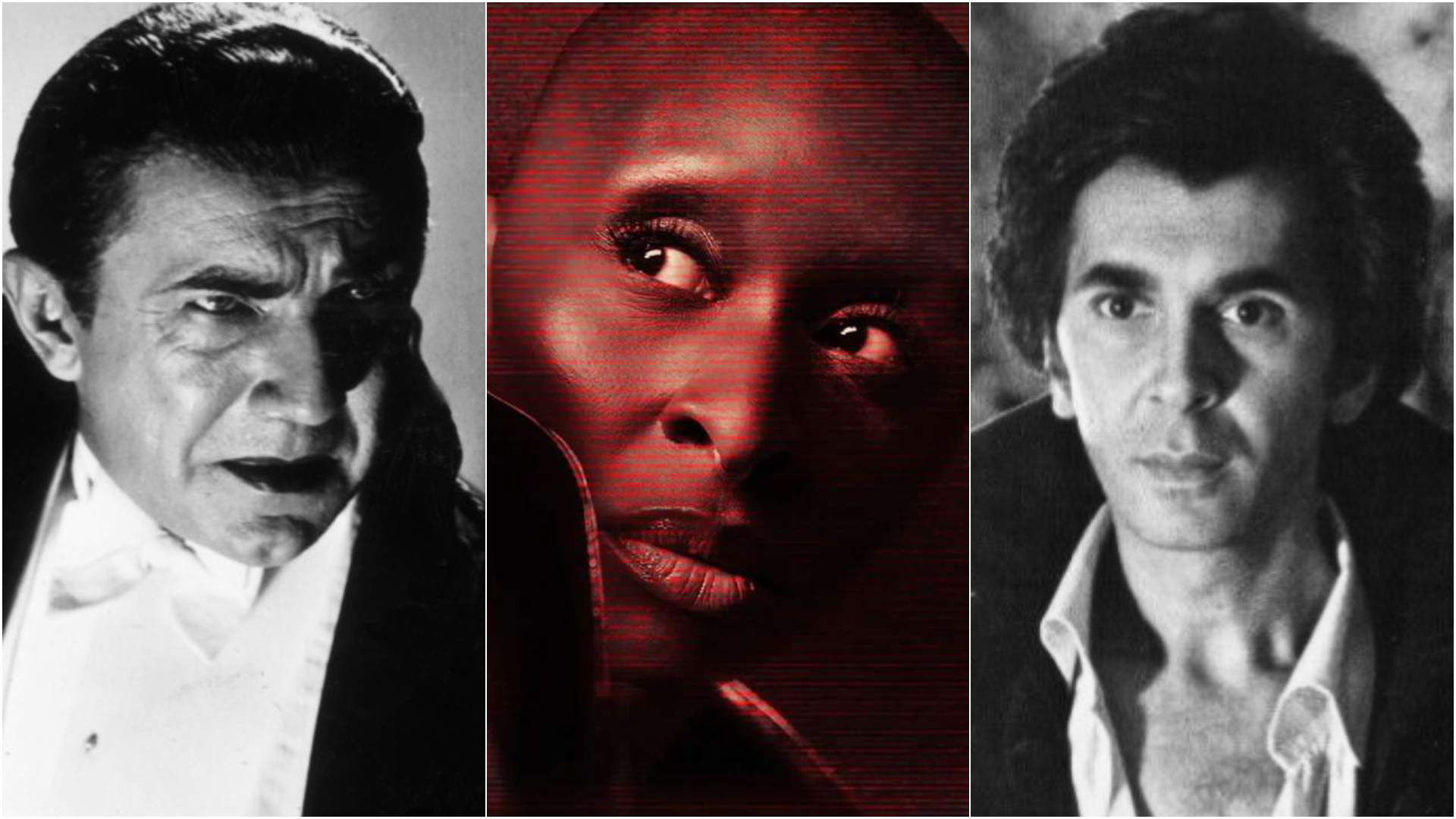
After haunting the pages of Bram Stoker’s 1897 novel, Count Dracula didn’t stay locked in literature for long. By the early 20th century, he had found a new home: the stage. Theater was where Dracula’s image solidified—from the lurking, caped aristocrat to the hypnotic figure clad in evening wear. These stage portrayals not only brought the Count to life for live audiences but also laid the blueprint for his portrayal in film, television and pop culture for the next hundred years.
This chapter in Dracula’s legacy begins with lawsuits, leaps to fame with Béla Lugosi and stretches into avant-garde reinterpretations around the globe. Theatrical Dracula is both immediate and enduring—driven by actor presence, clever staging and the perpetual thrill of seeing horror unfold in real time.
From the Page to the Play: Stoker’s Copyright Strategy

Although Bram Stoker died in 1912, he had long contemplated bringing Dracula to the stage. In fact, a one-night, script-in-hand performance titled Dracula, or The Undead was presented at London’s Lyceum Theatre on May 18, 1897—just eight days before the novel’s publication. The performance was mounted primarily to secure dramatic copyright under British law, with members of the Lyceum company reading from a script overseen by Stoker himself. No reviews survive, and no complete script is known to exist, underscoring that the performance was never intended as a commercial production. Notably absent was Henry Irving, the great actor-manager of the Lyceum and Stoker’s employer, whom Stoker had long envisioned as his ideal Count. Irving declined involvement, dismissing the material outright—an artistic rejection that would delay the novel’s theatrical rise. With Irving unwilling to lend his prestige to the material, Dracula would remain theatrically dormant for more than two decades—until a new generation of theater-makers reshaped the Count not as a grotesque folkloric monster but as a dangerously alluring aristocrat fit for the modern stage.

Stoker’s widow, Florence, spent years fiercely protecting the copyright, famously suing over the unauthorized German film Nosferatu (1922) and having prints ordered destroyed—a legal battle that underscored the value and vulnerability of the property long before Hollywood grasped its cinematic potential.
The Hamilton Deane Version (1924): Dracula Wears a Tuxedo
In 1924, Irish actor-playwright Hamilton Deane wrote and staged the first commercial theatrical adaptation of Dracula in the UK. A touring production that debuted at the Grand Theatre in Derby before reaching London, Deane’s version significantly reimagined the Count—not as a decaying corpse or folkloric predator, but as a suave, charming gentleman in a black evening suit and flowing cape.

This Dracula could be invited into your drawing room—and kill you there. Deane’s play reduced the novel’s scope, eliminated several characters, and introduced dramatic stage effects: trapdoors, mist machines, and blackout lighting to conceal Dracula’s entrances and exits. In a famous bit of theatrical mythology, uniformed nurses were stationed in theater lobbies in case audience members fainted—a piece of showmanship that helped cement the play’s reputation.
Critics were mixed, but audiences came in droves. The image of Dracula with slicked-back hair, a Medici collar and hypnotic eyes was born here—an image that would profoundly shape popular culture.
John L. Balderston and Béla Lugosi: Broadway Royalty

In 1927, American producer Horace Liveright brought Deane’s play to Broadway—but not before reshaping it for U.S. audiences. He hired journalist and playwright John L. Balderston to adapt the text, sharpening the dialogue, adding American characters and focusing the narrative more tightly on Dracula’s eerie seductions. It opened at the Fulton Theatre in New York on October 5, 1927, starring a then-unknown Hungarian actor named Béla Ferenc Dezső Blaskó—better known as Béla Lugosi.
Lugosi’s performance became legendary. He spoke with a deliberate cadence, used stillness as menace and imbued the Count with European exoticism and erotic danger. Audiences were mesmerized, and the production ran for 261 performances on Broadway before touring nationally. A young Carl Laemmle Jr., soon to head Universal Pictures, saw the production and immediately envisioned it on film.
When Dracula hit theaters in 1931, Lugosi reprised his role, forever fusing his identity with the character. “I am Dracula,” he famously said—and for generations, he was.
Post-Lugosi Productions: The Dracula Boom

The success of the Lugosi-led play spawned countless revivals and regional productions.
- Raymond Huntley (UK, 1924–30s): Originated the role in Deane’s version before Lugosi and became the UK’s Dracula of choice for years.
- John Carradine: Performed Dracula on stage in the early 1950s, though not with the same singular dominance as his film work.
- Frank Langella (1977–1978): Perhaps the most significant theatrical Dracula post-Lugosi, Langella starred in a lavish Broadway revival directed by Dennis Rosa, emphasizing romantic charisma and Victorian decadence. This production ran for hundreds of performances and led to a 1979 film version with Langella reprising the role opposite Laurence Olivier’s Van Helsing.
Experimental and International Stage Draculas
Beyond mainstream revivals, Dracula has been the subject of avant-garde, musical and international interpretations.
- Steven Dietz’s Dracula (1996): A frequently performed regional play that closely follows Stoker’s plot, often staged near Halloween.
- Dracula: A Chamber Musical (1997): A Canadian musical that premiered at the Stratford Festival, incorporating songs and a romantic tragedy angle.
- Japan’s Takarazuka Revue: The famous all-female troupe has staged stylized, highly choreographed versions of the story.
- Dracula, the Musical (2004): A Broadway musical by Frank Wildhorn that, despite ambitious production values and a strong cast led by Tom Hewitt, closed after 154 performances with mixed reviews.
Modern Dracula and Interactive Theater
Recent years have seen Dracula adapted for immersive and experimental theatrical experiences—showing how flexible the story remains. Productions have explored nontraditional staging, audience interaction and feminist reinterpretations that challenge the gothic mythos.
Cynthia Erivo’s Dracula (2026): A West End Reinvention
Adding to the long theatrical lineage of Dracula, a bold new production is set to open in London’s West End in February 2026, featuring Cynthia Erivo in a strikingly contemporary interpretation of Bram Stoker’s classic.
Directed and adapted by Kip Williams, this production springs from the Sydney Theatre Company’s acclaimed 2024 version and will run at the Noël Coward Theatre through May 2026. Erivo takes on all 23 roles in the story—including Count Dracula, Jonathan Harker, Mina, Van Helsing and others—blending live performance with prerecorded video and cinematic elements for a genre-defying theatrical experience.
Williams has described the piece as a fresh and immersive reinterpretation of the material, reflecting contemporary perspectives on fear, desire and identity. Though the production experienced a brief delay in previews, its February 17 opening night remains scheduled, with additional performances added to accommodate the limited 16-week season.
Erivo’s Dracula offers a testament to the enduring adaptability of Stoker’s tale—500 miles from the candlelit ghost story of 1897 and yet rooted in the same gothic impulse to thrill and unsettle.
Theatrical Legacy
While film made Dracula iconic, the stage gave him a voice. It created the visual and performative language—cape, accent, stare—that persists today. Theater allows Dracula to remain fluid: seductive or savage, metaphysical or physical, tragic or terrifying.
Before Dracula was a movie monster, he was a theatrical event—and now, centuries later, he continues to evolve with each new staging.
Coming Next: Part III – Dracula on Film
From Lugosi to Lee, from silent Nosferatu to Renfield, our next chapter explores Dracula’s rise as a cinematic icon—how the vampire became a star.