
Spoiler warning: This article discusses the vampire mythology and plot of Sinners.
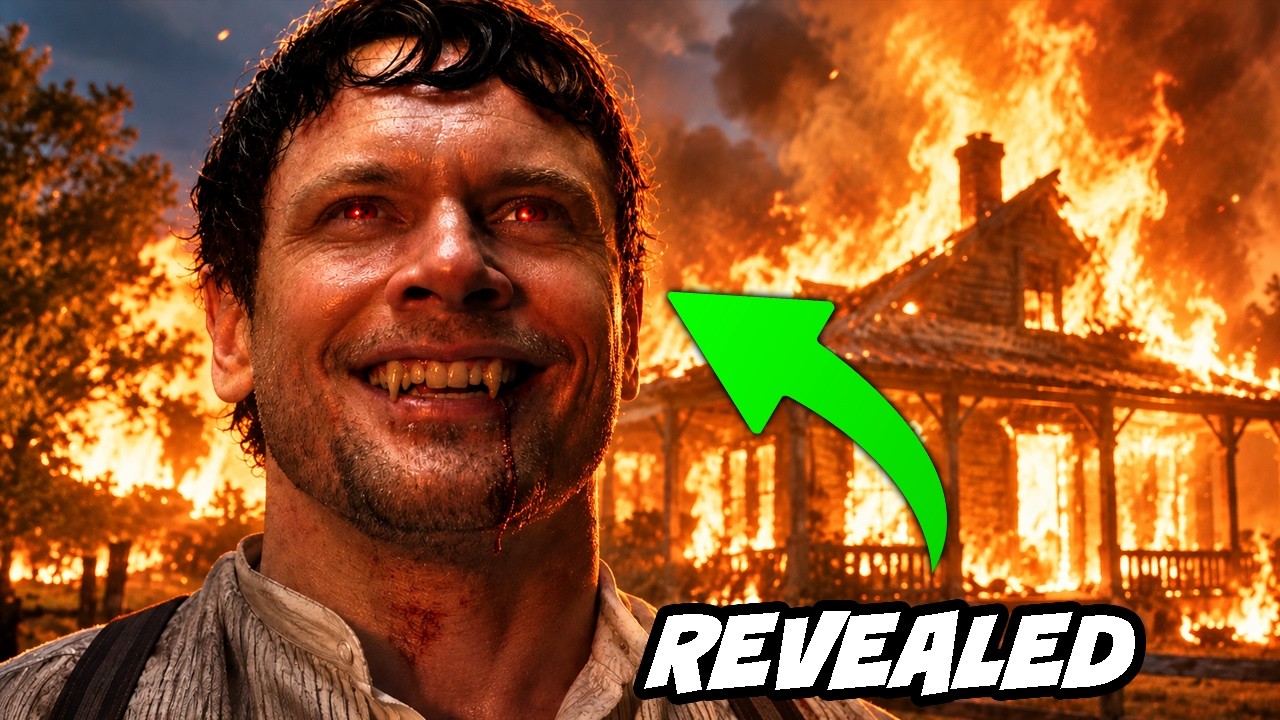
One of the most fascinating aspects of writer-director Ryan Coogler’s 2025 horror hit Sinners is Jack O’Connell’s Remmick, an Irish vampire who arrives in 1932 Mississippi with a disarming manner, an appreciation for music and a decidedly sinister appetite. But there’s something else about Remmick that many viewers may not realize: His origins can be traced to an Irish folk legend that predates Bram Stoker’s Dracula by centuries — and which some historians believe may have inspired the world’s most famous vampire.
The connection was explored by the YouTube channel Vampire Folklore in its video “Remmick’s Real Backstory — Sinners Vampire Explained.” At the center of the story is Abhartach, a mysterious Irish chieftain who, according to legend, simply refused to stay dead. While the historical connection to Dracula remains a matter of debate, Coogler himself has acknowledged that Abhartach helped inspire his film’s vampire antagonist.
Ryan Coogler looked to Ireland for Remmick’s origins

In an interview with The Irish Times, Coogler explained that his research into vampires led him to Bram Stoker, the Dublin-born author who published Dracula in 1897. From there, he discovered Abhartach, a figure from Irish folklore whom some researchers believe helped shape Stoker’s famous creation. Coogler described Abhartach as “this Irish nobleman who couldn’t be killed,” a simple description that gets to the heart of the legend, which concerns a cruel ruler whose subjects became so desperate to escape his tyranny that they arranged for him to be murdered. Unfortunately, death proved to be only a temporary inconvenience.
Coogler’s interest in Irish culture also influenced Remmick’s personality. Rather than portraying him as another solitary gothic monster, the filmmaker created a vampire who uses music, conversation and the promise of belonging to draw people toward him. It’s a striking contrast to the familiar image of Dracula brooding in his Transylvanian castle.
The terrifying legend of Abhartach
Abhartach’s story is associated with County Derry in Northern Ireland, particularly the townland of Slaughtaverty, where a burial site known as the Giant’s Grave remains linked to his name. According to tradition, Abhartach was a small but powerful chieftain and magician who terrorized the people under his control. Eventually, his subjects persuaded a neighboring chieftain to kill him, and the deed was carried out. Abhartach was buried standing upright, but the following morning he returned, apparently more dangerous than before. The chieftain killed him again, only for Abhartach to rise once more.
Realizing that conventional methods were useless, the chieftain sought supernatural advice. A druid instructed him to kill Abhartach a third time and bury him upside down, which finally prevented the tyrant from returning. That’s the basic version recorded by Irish scholar Patrick Weston Joyce in his 19th-century work The Origin and History of Irish Names of Places. Later retellings made the story considerably bloodier, with Abhartach returning from the dead demanding bowls of human blood from his subjects. The ritual required to stop him also became more elaborate, involving a sword made from yew wood, a heavy stone placed over his grave and thorn branches surrounding the burial site. These additions transformed Abhartach from a seemingly indestructible revenant into something much closer to the vampires familiar to modern audiences.
The Irish grave that keeps the legend alive
One reason the Abhartach story has survived is that it remains attached to an actual location. The burial site at Slaughtaverty, sometimes identified as Leacht Abhartach, is marked by stones and a thorn tree, with local tradition associating the monument with the undead chieftain. Over the years, stories have circulated about attempts to disturb the site, including accounts of machinery failing when people tried to remove the tree. Whether those incidents happened as described is impossible to establish, but such stories are an important part of how folklore survives, with a physical location giving the legend a sense of permanence.
Generations can point to the same stones and tell the same frightening tale, even as the details change. That doesn’t mean Abhartach was necessarily a historical person, much less an actual vampire, since his existence as a ruler has not been independently established. What survives is the legend and the grave traditionally associated with it.
Did Abhartach inspire Bram Stoker’s Dracula?
This is where the story becomes particularly intriguing. In 2000, Irish folklorist Bob Curran published an article in History Ireland titled “Was Dracula an Irishman?” arguing that Abhartach may have provided an important source of inspiration for Bram Stoker. Curran suggested that the novelist could have encountered the legend through Irish folklore and the intellectual circles of Dublin, including those associated with Lady Jane Wilde, the mother of Oscar Wilde.
The similarities are certainly provocative. Both Abhartach and Dracula are aristocratic figures associated with supernatural evil, both prey upon people under their influence, and both resist ordinary death and require unusual methods to be permanently defeated. They also embody a particularly disturbing fear: the powerful ruler who continues exploiting others even after death. Curran’s argument suggests that Stoker’s creation may owe more to his Irish cultural background than traditional accounts of Dracula’s origins generally acknowledge.
However, there’s an important distinction between a compelling theory and a proven literary influence. No surviving evidence establishes that Stoker read or heard the Abhartach story, and the earliest recorded version of the legend does not include the blood-drinking detail that makes later versions resemble vampire folklore. Stoker also researched Eastern European beliefs while developing Dracula, and his surviving notes provide evidence of those interests. The Abhartach connection therefore remains an intriguing possibility rather than a settled explanation for Dracula’s creation.
Why Remmick is different from Dracula

For Sinners, Coogler wasn’t interested in simply creating another version of the Transylvanian count. Remmick is a vampire who understands the appeal of community, music and shared identity, with his apparent warmth making him especially dangerous because he offers people something they genuinely desire. In a separate interview with RogerEbert.com, Coogler described Remmick as a centuries-old Irish vampire who had been transformed while still a relatively young man. He also explained that Remmick recognizes the contradictions of American racism and sees something appealing in the Black community gathered at the juke joint.
The character’s desire to bring people together, however, carries a terrifying price: Those who accept his invitation must surrender their humanity and join him among the undead. That makes Remmick’s promise of belonging both seductive and monstrous, while the Irish musical traditions woven into the film further distinguish him from the usual cinematic vampire. His performance of “The Rocky Road to Dublin” is more than an atmospheric flourish, helping establish his cultural identity and his method of drawing others into his world.
Although Remmick is not presented as a literal retelling of Abhartach’s story, the influence is evident in Coogler’s conception of an ancient Irish predator whose power depends on the people around him. Like the legendary chieftain, Remmick is not simply a monster hiding in the shadows, but a figure who seeks to build and control a community around himself.
An Irish vampire legend finds new life
Abhartach’s story has already inspired other horror filmmakers. The 2020 Irish horror-comedy Boys from County Hell, directed by Chris Baugh, also drew upon the legend of the undead chieftain. With Sinners, the mythology reached a much larger international audience, even if most viewers didn’t immediately recognize its origins.
Perhaps that’s the most interesting thing about the connection. For centuries, the story of Abhartach has been retold, expanded and transformed, its details changing from a cruel magician who refuses to stay buried to a blood-drinking monster whose grave must be sealed against his return. Now, through Ryan Coogler and Jack O’Connell, another version of that ancient nightmare has emerged, this time in the Mississippi Delta, singing Irish folk songs and offering immortality to anyone willing to let him through the door.
Abhartach may or may not have helped inspire Dracula, but his influence on Remmick gives one of modern horror’s most memorable vampires a surprisingly old and distinctly Irish pedigree.