
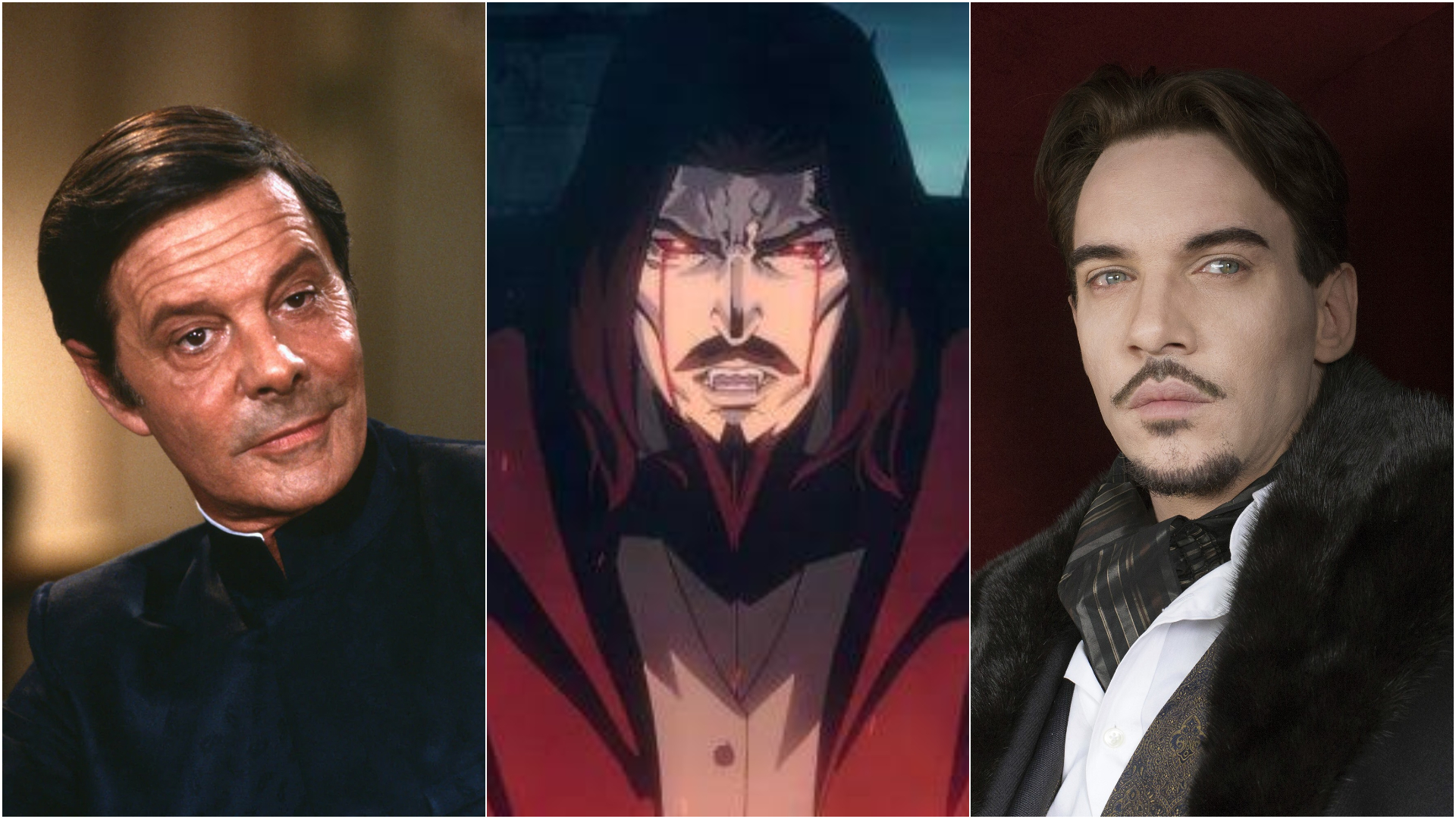
For a character born in Gothic literature and made immortal by the silver screen, Count Dracula has also left a sizable—and often surprising—bite on television. From live anthology drama to romantic melodrama, Saturday-morning cartoons, prime-time reboots and streaming horror, Bram Stoker’s vampire has proven remarkably adaptable to the small screen.
Television gave Dracula a different kind of power: intimacy. Audiences weren’t encountering him in a theater or on stage. He was coming directly into their living rooms. Sometimes he was terrifying, sometimes romantic and sometimes played for laughs, but Dracula kept changing with television itself.
In this fourth and final chapter, we trace Dracula’s long journey across television—American, British, animated and international—and discover that some of his most intriguing incarnations never appeared on a movie screen at all.
EARLY TELEVISION: DRACULA COMES INTO THE LIVING ROOM
Dracula’s television history is difficult to document completely because so much early television was broadcast live and either wasn’t recorded or hasn’t survived. One important American example arrived on NBC’s daytime anthology Matinee Theater on November 23, 1956.
Directed by Lamont Johnson and adapted by Robert Esson, Dracula starred John Carradine as the Count and Lisa Daniels as Lucy Weston. Carradine was already closely associated with Dracula after playing the vampire in Universal’s House of Frankenstein and House of Dracula, but television offered him another opportunity to sink his teeth into the role. Records for NBC’s Matinee Theater collection at UCLA confirm the production, while contemporary newspaper coverage indicates that the adaptation didn’t shy away from horror despite airing during the daytime.
At roughly the same time, Dracula was gaining another foothold on television without appearing in newly produced dramas at all. Maila Nurmi’s Vampira and the wave of horror hosts who followed helped turn old horror movies into late-night television events. An especially important development came in 1957, when Screen Gems’ Shock! package brought dozens of classic Universal horror films to local television stations. Bela Lugosi’s Dracula could now haunt a generation that had never seen it theatrically.
Hosts such as John Zacherle—first as Roland and later as Zacherley—turned horror broadcasts into shows unto themselves. Capes, coffins, macabre jokes and mock-Gothic sets made Dracula’s visual language part of television culture even when the Count wasn’t technically on the program.
DRACULA FINDS A HOME IN THE ANTHOLOGY ERA

One of the most interesting surviving early British television Draculas came in 1968, when the ITV anthology Mystery and Imagination adapted Stoker’s novel with Denholm Elliott as the Count. Elliott’s Dracula aired November 18, 1968, and survives—a welcome exception for British television of the period. The adaptation made significant changes, most notably combining aspects of Jonathan Harker and Renfield, with Corin Redgrave playing Harker. Yet it retained enough of Stoker’s Gothic atmosphere to stand as one of television’s earliest substantial Dracula adaptations.
Dracula even turned up on Rod Serling’s Night Gallery. In the 1971 segment “The Devil Is Not Mocked,” Francis Lederer played the mysterious master of a Balkan castle confronted by Nazis during World War II. The final revelation: the castle is headquarters for the resistance and its commander is Count Dracula. Lederer had previously played the vampire in the 1958 feature The Return of Dracula, making the episode an unusual television encore for his interpretation of the character.
DARK SHADOWS: DRACULA WITHOUT DRACULA

Dracula himself never became a resident of Collinwood, but his shadow hangs heavily over Dark Shadows.
Dan Curtis’ Gothic daytime soap had struggled after its 1966 debut before introducing Jonathan Frid’s Barnabas Collins in 1967. A nearly 200-year-old vampire burdened by his past, Barnabas initially arrived as a menace but developed into something much more complicated: monster, romantic figure, antihero and eventually one of television’s first vampire stars.
Barnabas wasn’t Dracula, and it’s important not to pretend otherwise. But Dark Shadows demonstrated something crucial for the future of televised vampires: an undead character could sustain continuing emotional drama rather than simply provide the monster for a single horror story.
Curtis would eventually get his chance to tackle Dracula directly.
DRACULA’S 1970s TELEVISION BOOM

Some of television’s most intriguing Dracula adaptations arrived during the 1970s, including productions outside Britain and the United States.
Czechoslovak Television produced Hrabě Drakula (Count Dracula) in 1970, with Ilja Racek as Dracula and Anna Procházková directing and co-writing. The black-and-white production is strikingly faithful to Stoker and historically notable as the first known screen adaptation of the novel directed by a woman. It retains characters and incidents frequently discarded by movie versions, making it an intriguing counterpart to the better-known British adaptations.
Canada offered its own version in 1973 through CBC’s Gothic anthology Purple Playhouse. Norman Welsh played Dracula, Nehemiah Persoff was Van Helsing and a young Blair Brown appeared as Mina. Directed by Jack Nixon-Browne and adapted by Rod Coneybeare, it was one of eight Victorian melodramas presented by the series.
Then came one of American television’s best-known Draculas.
Dracula (1974) — Dan Curtis directed and Richard Matheson wrote this adaptation starring Jack Palance. Originally produced in 1973 and broadcast by CBS in February 1974 after an earlier planned airing was postponed, it gave Dracula an emotional motivation that would become increasingly familiar: Mina resembles a woman he loved centuries earlier.
That reincarnated-love element was not part of Stoker’s novel, but it became enormously influential in later Dracula storytelling, most famously in Francis Ford Coppola’s 1992 Bram Stoker’s Dracula. Palance’s Count combines physical menace with romantic tragedy, anticipating the increasingly sympathetic Draculas to come.
THE BBC’S DEFINITIVE COUNT?
Three years later came one of the most ambitious attempts to put Stoker’s novel on television. Count Dracula (1977) starred Louis Jourdan as Dracula and Frank Finlay as Van Helsing. Written by Gerald Savory and directed by Philip Saville, the 155-minute BBC production premiered December 22, 1977, and subsequently reached American viewers through PBS’ Great Performances in 1978.
Where many adaptations cannibalized Stoker for characters and incidents, Count Dracula made a concerted effort to preserve the architecture of the novel. Jourdan’s Count is sophisticated and seductive but never completely humanized. The result remains one of television’s most faithful encounters with Stoker’s Dracula.
DRACULA GOES TO SATURDAY MORNING
By this point, Dracula was no longer confined to horror.
Filmation’s Groovie Goolies turned the classic monsters into broad cartoon characters, with Drac sharing the screen with Frankie and Wolfie. Dracula had become recognizable enough that children didn’t need an explanation: cape, fangs and Transylvanian mannerisms immediately told them who he was.
An even more extraordinary transformation began on Sesame Street in 1972. Count von Count was conceived as a comic echo of Bela Lugosi’s Dracula, complete with cape, accent, organ music and supernatural flourishes. But instead of counting victims, he counted everything else. The Smithsonian confirms that the character began as a parody of Lugosi’s Dracula. More than half a century later, the Count remains one of the most universally recognizable descendants of Stoker’s creation.
Hanna-Barbera went further with Drak Pack (1980). The Saturday-morning series centered on teenage descendants of Dracula, Frankenstein’s monster and the Wolf Man attempting to atone for their ancestors’ misdeeds. Dracula himself appeared as “Big D,” the group’s mentor. The CBS series ran for 16 episodes.
The monster who once terrified Victorian readers had officially become Saturday-morning entertainment.
DRACULA BECOMES A WEEKLY TELEVISION VILLAIN
The next major reinvention came with Dracula: The Series (1990–91).
Geordie Johnson played Dracula, now operating under the none-too-subtle alias Alexander Lucard—“Dracula” backwards—as a wealthy international businessman. Bernard Behrens played vampire hunter Gustav Helsing, while the young cast included Mia Kirshner.
Produced as family entertainment and filmed in Luxembourg, the syndicated series mixed horror, adventure, comedy and adolescent drama. It lasted one season and 21 episodes, but its premise anticipated something television would repeatedly return to: Dracula functioning in the modern world not as a mysterious foreign aristocrat but as a powerful businessman hiding in plain sight.
BUFFY FINALLY MEETS THE BIG GUY
By the time Buffy the Vampire Slayer reached its fifth season in 2000, Buffy Summers had killed so many vampires that introducing Dracula himself almost seemed inevitable.
“Buffy vs. Dracula,” which aired September 26, 2000, starred Rudolf Martin as the Count. Rather than simply turning Dracula into another Sunnydale vampire, the episode allows him to retain abilities and mystique that distinguish him from Buffy’s usual opponents. He mesmerizes victims, transforms into mist and bats, and seems remarkably resistant to staying dead.
The joke is that Dracula’s reputation precedes him even in a world where vampires are routine. Some members of the Scooby Gang are starstruck. Buffy is considerably less impressed.
Rudolf Martin’s connection to Dracula didn’t end there. The same year he played Vlad Dracula rather than the fictional vampire in USA Network’s television movie Dark Prince: The True Story of Dracula, an attempt to dramatize the historical prince whose name became permanently linked with Stoker’s Count.
DRACULA GOES GLOBAL — AND MODERN
A particularly unusual adaptation arrived from Italy and Germany in 2002. Roger Young’s two-part Dracula—also known as Il bacio di Dracula—starred Patrick Bergin and moved Stoker’s characters into the modern world. Produced as an international English-language miniseries, it aired on Italy’s Rai 1 and featured Giancarlo Giannini among its cast.
BBC One returned to Stoker in Dracula (2006) with Marc Warren as the Count and David Suchet as Van Helsing. Rather than aiming for the fidelity of the 1977 version, this adaptation substantially rearranged Stoker’s material, incorporating disease, sexuality and a reworked motivation for Arthur Holmwood into its interpretation.
That same decade, television continued finding ways to insert Dracula into other genres. TNT’s The Librarian: Curse of the Judas Chalice (2008) sent Noah Wyle’s Flynn Carsen into an adventure involving a scheme to resurrect Vlad Dracula, with Bruce Davison ultimately occupying the Dracula role.
And Supernatural paid affectionate tribute to Universal horror in its 2008 episode “Monster Movie.” Shot in black and white, the story features a shapeshifter assuming the identities of classic movie monsters—including Dracula—turning the episode into both parody and love letter to the horror films that helped establish the Count’s screen image.
DRACULA RETURNS TO PRIME TIME
NBC attempted to turn Dracula into an ongoing adult drama in Dracula (2013–14), starring Jonathan Rhys Meyers.
This Dracula arrives in Victorian London masquerading as Alexander Grayson, an American industrialist promising to bring modern technology to British society. Beneath that identity is a centuries-old vampire pursuing revenge against those responsible for his curse.
The production was lavish, serialized and decidedly revisionist, mixing Stoker characters with conspiracy drama, romance and an industrial-age revenge story. NBC gave the series a 10-episode straight-to-series commitment, but canceled it after one season.
It demonstrated both Dracula’s flexibility and the difficulty of turning him into a conventional weekly protagonist. The Count works wonderfully as an unstoppable force entering other people’s lives. Keeping him at the center of an open-ended television narrative is a different challenge.
DRACULA IN ANIME AND STREAMING ANIMATION
Japanese animation and anime-inspired television found entirely different uses for Dracula.
In Hellsing, Alucard ultimately represents a version of Dracula transformed into something extraordinary: the legendary vampire now serves the Hellsing organization, hunting supernatural threats more monstrous than himself.
Netflix’s Castlevania offered another radical interpretation. Voiced by Graham McTavish, Dracula is still terrifyingly powerful, but the series gives his campaign against humanity an emotional catalyst: the murder of his human wife, Lisa. Grief turns into genocidal rage, making Dracula simultaneously the series’ great monster and one of its great tragedies.
This is a long way from Lugosi standing at the top of the castle stairs. Yet the central idea remains recognizable: an ancient, enormously powerful outsider whose relationship with humanity oscillates between fascination and contempt.
DRACULA FOR A NEW GENERATION
The Hotel Transylvania movies turned Dracula into a neurotic father and hotel owner, but television eventually got its own version of that universe.
Hotel Transylvania: The Series (2017–20) served as a prequel to the films and focused primarily on young Mavis while her father was away on Vampire Council business. Dracula remained part of the series, now firmly transformed from Gothic nightmare into an exasperated cartoon parent. The Disney Channel series ran for two seasons.
It’s difficult to imagine a better demonstration of Dracula’s cultural durability. A character created to frighten adult readers in 1897 had become sufficiently universal to function in children’s television without losing his identity.
THE BBC AND NETFLIX LET DRACULA LOOSE AGAIN
The most substantial recent live-action television adaptation arrived in 2020 from Sherlock creators Steven Moffat and Mark Gatiss.
Their three-part Dracula starred Claes Bang as the Count and Dolly Wells as an ingenious reinvention of the Van Helsing role. The opening installment appears at first to be another Gothic retelling of Stoker, beginning with Jonathan Harker’s horrific encounter with Dracula. But the series increasingly breaks away from the expected story before making an audacious leap into the present day.
Netflix described the series as transforming the Dracula legend with new stories that explored both his crimes and vulnerabilities.
Bang’s Dracula is witty, cruel, seductive and fully aware of his own theatricality. Rather than running away from more than a century of Dracula movies and television, the series plays with the audience’s familiarity with them.
DRACULA’S STRANGE TELEVISION AFTERLIFE
Not every Dracula television appearance has been a straight adaptation.
CBS’ The Amazing Race sent contestants into the Transylvanian countryside during Season 14 in 2009, where a Dracula-themed task involved searching through coffins. The episode aired March 1, 2009—not 2011, as sometimes reported.
And while FX’s What We Do in the Shadows (2019–24) isn’t about Dracula, it may be the ultimate expression of how completely vampire screen history has become part of popular culture. Its Vampiric Council famously brought together performers associated with earlier vampire roles, turning decades of screen-vampire history into an elaborate inside joke.
DRACULA IN THE STREAMING ERA
Television has arguably done something with Dracula that movies cannot do quite as easily: allow him to inhabit different genres simultaneously.
He can be the Gothic monster of Count Dracula, the romantic antihero of Dan Curtis’ adaptation, the corporate villain of Dracula: The Series, a supernatural celebrity on Buffy, a grieving father in Castlevania, a joke for preschoolers through Count von Count, or the gleefully monstrous centerpiece of the BBC/Netflix Dracula.
The technology has changed just as dramatically. Dracula traveled from ephemeral live television to videotaped anthology drama, network movies, syndication, Saturday morning animation, prestige miniseries and global streaming.
Yet television keeps circling back to the same question Stoker posed in 1897: What happens when an ancient monster enters the modern world?
Every generation supplies a different answer.
FINAL BITE
Across literature, stage, film and television, Count Dracula has remained undead in the truest sense—refusing to stay buried and constantly adapting to the audience waiting for him.
Television may demonstrate that adaptability better than any other medium. Dracula has been terrifying and ridiculous, romantic and repulsive, tragic and gleefully evil. He has fought vampire slayers, battled Nazis, run corporations, raised children, appeared on Sesame Street and declared war on humanity.
Some versions preserve Bram Stoker. Others preserve little more than the name, cape, fangs and promise of immortality. But that’s the peculiar power Dracula acquired long ago. He stopped belonging exclusively to a single novel—or even to horror itself. The Count can change almost everything about himself and still, somehow, remain Dracula. He may sleep in coffins, but on television, Count Dracula has never stayed dead for long.