
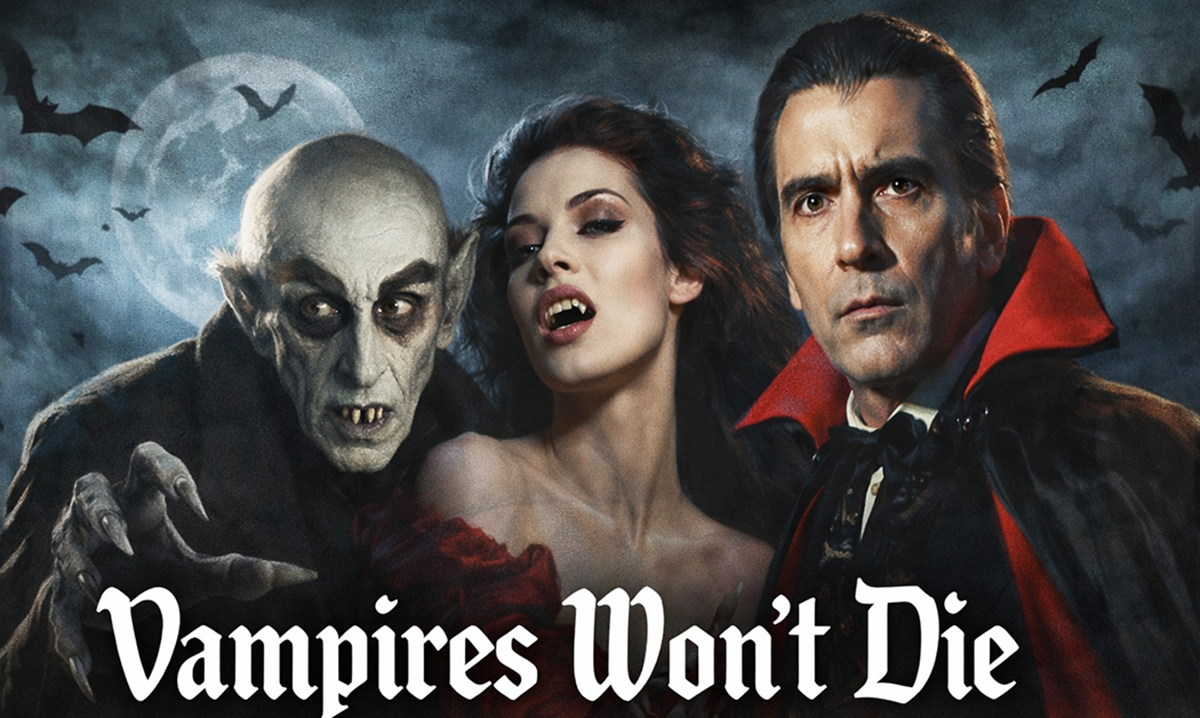
Based on reporting by Erik Piepenburg for The New York Times
According to a recent New York Times feature by Erik Piepenburg, vampires have proven to be one of pop culture’s most durable monsters — endlessly reinvented, endlessly revealing. Since the publication of Bram Stoker’s Dracula in 1897, the vampire has survived every cultural shift by adapting to the fears, desires, and contradictions of each new generation.
Citing scholar Nina Auerbach’s influential book Our Vampires, Ourselves, Piepenburg frames the vampire as a “dramatically generational” figure — a creature that changes shape depending on what society needs it to represent. Sometimes the vampire is pure evil, sometimes a tragic romantic, sometimes a queer outsider, sometimes a warrior, and sometimes a punchline. But it never disappears.
The article notes that vampires endure because they look like us. As horror author Grady Hendrix puts it, vampires are “the only monster that looks like us,” which allows them to embody anxieties about identity, desire, addiction, mortality, and power. They ask a seductive question that never goes out of style: Is immortality a gift — or a curse?

Piepenburg organizes vampire history into overlapping archetypes. There are the irredeemable monsters, from Max Schreck’s rat-like Count Orlok in Nosferatu to the window-scratching terrors of Salem’s Lot. There are the seductive sophisticates — Bela Lugosi, Christopher Lee, Frank Langella — whose elegance and sexuality made vampirism dangerously appealing. Modern incarnations pushed that sensuality further, from Interview With the Vampire to True Blood, where eternal life is inseparable from desire.
The vampire’s long-standing connection to queerness also receives attention. Figures like Barnabas Collins on Dark Shadows offered coded representations of otherness that resonated with viewers who felt different or marginalized. Later works such as The Hunger and Interview With the Vampire made that subtext explicit, while newer interpretations continue to treat vampirism as a metaphor for forbidden identity and longing.

The article also explores how vampires have functioned as metaphors for social crises — from addiction (Ganja & Hess, The Addiction) to AIDS-era anxieties (Near Dark). At the same time, humor has always been part of the bloodline, from Abbott and Costello Meet Frankenstein to What We Do in the Shadows, proving that even horror’s darkest icons can be disarmed through comedy.
Piepenburg points out that vampires are currently enjoying another cultural surge, especially on stage. Cynthia Erivo’s one-woman Dracula is running in London’s West End, while Broadway’s The Lost Boys musical is set to open this spring. These projects underscore the vampire’s theatrical appeal — larger-than-life emotions, operatic stakes, and eternal questions about love, death, and time.

As The New York Times article makes clear, vampires don’t survive because they refuse to change. They survive because they do. Each era drains something new from them — fear, desire, humor, meaning — and in return, the vampire reflects us back to ourselves.
And that’s why, no matter how many times the stake falls, vampires never stay dead.