
Based on reporting by Stanley Stepanic for The Conversation (via Citizen Tribune)
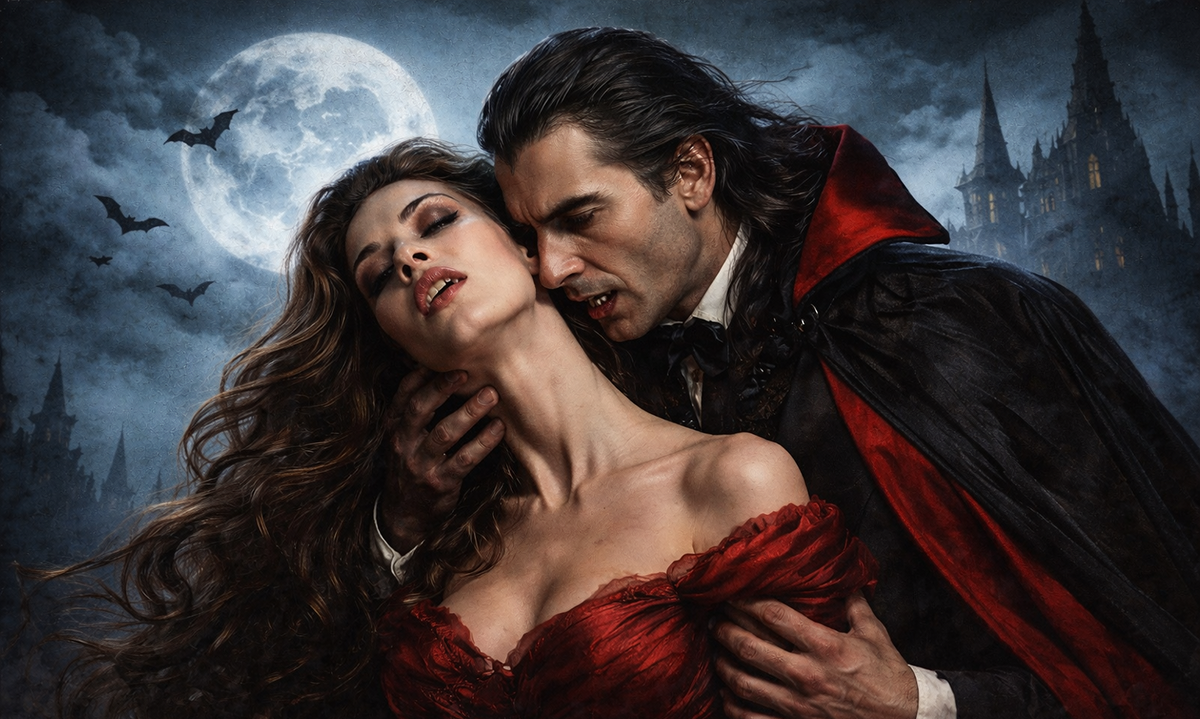
For more than a century, Count Dracula has refused to stay in his coffin — and according to a recent essay by Stanley Stepanic of the University of Virginia, that’s largely because he keeps evolving along with us. Once depicted as a revolting predator, Dracula has steadily transformed into one of pop culture’s most enduring romantic figures, reflecting changing attitudes about love, sex, and desire.
As Stepanic explains in his article for The Conversation, Bram Stoker’s original 1897 novel presents Dracula as anything but seductive. He is described as aged, bald, coarse, foul-breathed, and physically unsettling — part of a long literary tradition of vampires as decrepit, predatory old men. That image carried over into early cinema, most memorably in F.W. Murnau’s Nosferatu (1922), where Count Orlok appears ratlike, emaciated, and monstrous.
The shift toward Dracula as a lover didn’t happen overnight. It emerged gradually through film, beginning in the 1940s when Hollywood softened the Count’s edges. In House of Frankenstein (1944), Dracula begins to resemble a romantic interloper rather than a purely repulsive threat, engaging in scenes that play like ominous courtship rather than outright assault. From there, the Count’s cinematic evolution mirrored broader cultural changes, particularly after World War II, as popular media began exploring sexuality, infidelity, and nontraditional relationships more openly.
By the late 1950s, Christopher Lee’s Dracula for Hammer Films added physical allure and sexual tension to the character, even as he remained dangerous. Scenes of predation were increasingly charged with eroticism — so much so that censors took notice. Director Terence Fisher openly encouraged performances that suggested sexual awakening alongside terror, blurring the line between fear and desire.
In the decades that followed, Dracula’s romantic identity became more explicit. Films in the 1970s portrayed him as a tragic lover capable of yearning, heartbreak, and even self-destruction. Television adaptations went further, introducing the idea of Dracula searching for a lost or reincarnated wife — a concept that would soon become central to the mythology.
That idea reached its most influential expression in Francis Ford Coppola’s Bram Stoker’s Dracula (1992), where the Count pursues Mina as the reincarnation of his dead bride. As Stepanic notes, this narrative wasn’t entirely new. It had already been explored on television in Dark Shadows, where Barnabas Collins’ obsession with recreating his romance with the long-dead Josette fundamentally reshaped how audiences understood vampires — not just as monsters, but as figures defined by memory, loss, and longing.
In more recent years, this romantic interpretation has continued to dominate. Luc Besson’s Dracula, which premiered in the U.S. in early 2026, emphasizes passion and emotional excess, portraying the Count less as a villain and more as a doomed romantic. Stage productions have followed suit, from Cynthia Erivo’s one-woman Dracula in London to comedic and queer reinterpretations that lean into the Count’s erotic flexibility.
As Stepanic argues, Dracula’s enduring appeal lies in his adaptability. He can still terrify, as Robert Eggers’ Nosferatu (2024) demonstrates, but he can also seduce, mourn, and love. In that sense, Dracula functions as a mirror of human experience — a figure through whom we explore the thin line between passion and pain, desire and danger.
Whether monster, lover, or both, Dracula survives because he reflects what we fear, what we want, and what we’re still trying to understand about ourselves.
Source:
This article is based on “How Dracula became a red-hot lover” by Stanley Stepanic, originally published by The Conversation and republished by the Citizen Tribune.