
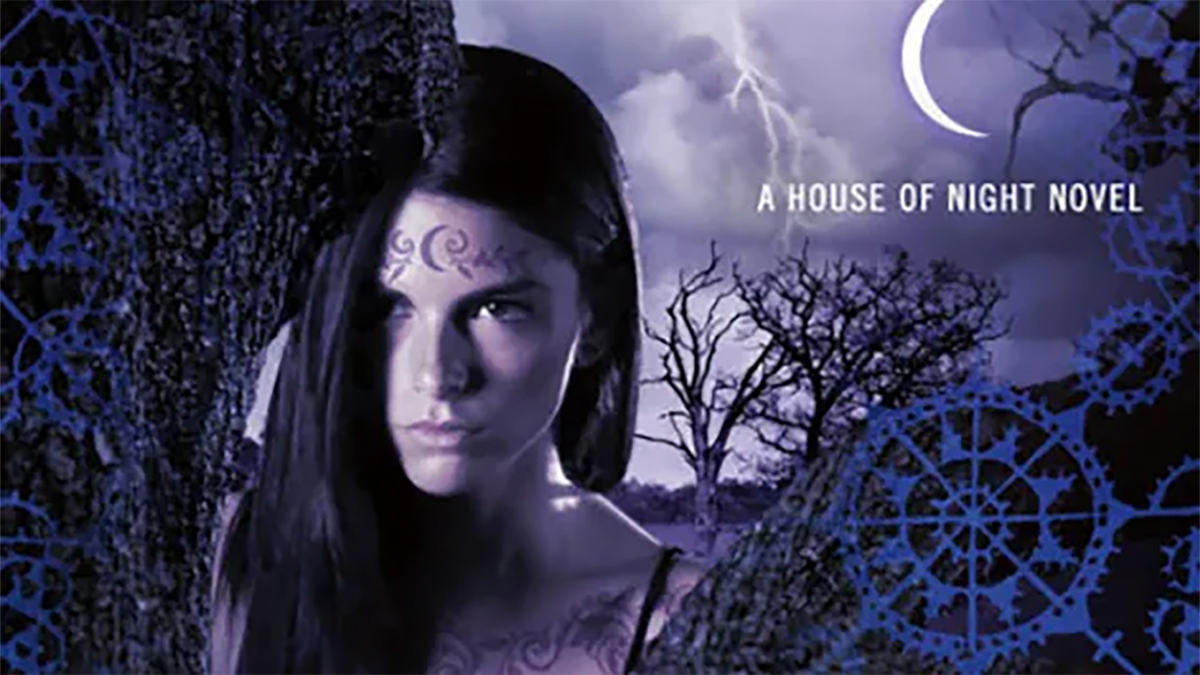
Note: This interview with author P.C. Cast and producer David Cormican was conducted back in 2019 when House of Night was in active development as a television series. While that show has yet to move further in the production process, historically it’s interesting to see what the thought process was at the time.
Let’s face it: Vampires aren’t going anywhere. Yes, they may rise and fall like the sun, going through different ebbs and flows over the decades, but they’ve never really been gone. In fact, this horror sub-genre, a favorite of old and new Holywood alike, remains enormously popular and always has been, whether you’re talking about Dracula in all his incarnations, Barnabas Collins in Dark Shadows, Angel and Spike from Buffy the Vampire Slayer, Edward Cullen from The Twilight Saga or, now, Zoey Redbird, the fledgling vampire at the center of the House of Night book series that is currently being adapted into a TV show by the folks behind Shadowhunters.
House of Night is a series of 12 novels from mother-and-daughter writing team P.C. Cast and Kristin Cast, which postulates that there is a small percentage among the world’s teenagers, who, when their adolescent hormones kick in, activate something known as Junk — or non-coded — DNA, which begins them on their journey to become vampires (or vampyres, as they’re known in the books).
When this happens, those teens must attend a “House of Night” boarding school, where they learn exactly how to live as a vampire and survive this transformation. One in 10 can’t handle the change and end up dying but, for the rest, as P.C. has explained it, there is a great reward: They’re stronger than most humans, have heightened senses, accelerated reflexes and live more than five centuries.
“OK, just bear with me on this,” laughs P.C. during an exclusive interview, “but I have always thought that young adults are kind of like vampires. They believe they’re immortal, right? Because you do believe you’re immortal when you’re a teenager. They also all want to be special, they all want to be the brightest and most beautiful about something, whether it’s on the football field or in a drama class or just the fashion parade going on every day in school. I think that they identify very closely with beings that are ‘extra’ in different ways, including their emotions. Because when you deal with vampires, you’re also dealing with a lot of passions that come to the forefront. Blood passion, blood lust and that type of thing. And, of course, hormones in teenagers are going crazy and they’re dealing with their own passions. So I just have always thought that it’s a very close identification between young adults and paranormal beings like vampires.”
Vampires Aren’t Just for Kids

As focused as she is on young adults, P.C. is certainly aware that fascination with the undead is spread across different ages. “We all are drawn to the bight and the beautiful and the powerful,” she suggests. “And we can also empathize with their problems; that even though a lot of vampires are drawn as beautiful and powerful with all these paranormal abilities, the best vampires also have weaknesses and faults and flaws just like we do. So I still think that they’re very identifiable.”
Why a TV Show?
Coming off of the success of Shadowhunters, it seems that David Cormican and Don Carmody were looking for a project that would connect with the same sort of audience. Explains David, “The initial appeal for me was the mass of the mythology of being a vampire in this world that is House of Night, which was surprising to me in that it’s a vampire ‘finishing school,’ which actually makes sense. But then you get into it and you realize that there are instant stakes in that if you don’t make the change, you die. For me that’s like, ‘Oh, my God, there’s potential jeopardy in every episode,’ which is very real. Not saying we’re going to kill someone off in every episode, but for me it was the math and biology behind all of that that was so enamoring. And P.C.’s father is a biologist, which sort of rooted all of this.”
Junk DNA and Pheromones

P.C., an English teacher, explains, “The first thing I did when I decided to write this series was, I knew that I had to make it matriarch-based, because, you know, that’s me, that’s my writing, and then I also really wanted to base it on a biological change. So I called my dad, I was like, “Dad, let’s talk about Junk DNA and pheromones and stuff like that. Dad taught high school biology for, he would say, about a million years, and actually he and I taught together at the same high school for a decade.”
“You stole my thunder,” David adds with a laugh, “because I was going to finish with the other thing that captured me, which was the matriarchal society element. That was the clincher for me, because I had never read that before. That makes so much sense, especially when you get deeper into the books and you really start to understand all of that. It’s 2019, and that makes even more sense with where we’re at in the world. It’s time.”
The Vampire Element Was Secondary
One point P.C. emphasizes is, “I didn’t look at House of Night as a vampire story. I taught high school for 15 years, and when my agent came to me in 2005 and said, ‘I want you to write a story about a vampire finishing school,’ I was, like, ‘Ooh!’ As soon as she said school, I thought young adults, because I was teaching high school, and so I said, ‘Yeah, yeah. Young Adult.’ Back in 2005 she said, ‘What’s ‘Young Adult?’ and I said, ‘YA, Young Adult. Let me do it like that; let me try high school.’
“She said she was thinking more about a nasty college co-ed with biting and sucking classes, and bondage classes,” P.C. continues. “And I was, like, ‘Yeah, I can do that too, but I really want to join the YA wave.’ It was just starting to get some momentum and, because of teaching for so long, I decided right then that I wanted to tell a story about the kids I saw every day. The paranormal aspect of it was just like icing on the cake or gravy — not that you would put gravy on cake. You really shouldn’t.”
Identifiable Kids

She elaborates, “I knew the most important aspect of the series was going to be to create kids who other teenagers could identify with. That was my focus. It was secondary that I added the mythology of vampirism. That mythology was very important to me as I created it, to be sure, but my concern was that it be inclusive. I was writing it in the Bible Belt, which was not, and is not, inclusive. I felt very strongly that it needed to be matriarchal and yet not so matriarchal that it would exclude males at all. I think I weaved that very well into House of Night. The vampire stuff, again, came second; it was the kids who came first and then I just added the things that I wanted to.”
High School With Fangs
P.C. enthuses, “Oh, man, I love writing YA because of the coming of age aspect. And because I can have my characters make mistakes that, if I was writing an adult novel, people would just be like, ‘Oh please, woman, why is this 30-something, 40-something hero or heroine screwing up like this?’ But make them 16 to 18, and the screw up gets to be a maturing and character growth and world-opening to them. I love that aspect of writing YA.”
Testing Boundaries

Suggests David, “It’s basically you get a world of firsts, where it’s first for a mistake. And the stakes are that much higher because failure is imminent across the board. And because it’s first, there’s nervousness and there’s excitements about everything as well. You’re just sort of learning who you are and all of that, and it’s just about testing boundaries. And so I think that’s ultimately why it’s appealing, because we all remember those times so vividly.”
Teen Angst
“I will never forget sitting outside in the parking lot of the IGA [supermarket] in my little town and just sobbing and looking at my mother and saying, ‘Does anyone die of a broken heart?’” recalls P.C., “and I was not being cliché. I was 16 and just broken; my first love broke up with me, and I was just so devastated. Since then I’ve been married and divorced multiple times and had never been that devastated, because everything then was so new, so now, and teenagers live very much in the present.”
Defining Zoey

When asked about the challenges of bringing the lead character of Zoey to life on the TV show, P.C. points out, “I’ve already brought her to life, so this is going to be a hard question for me. She lives and breathes with me, I based her on Kristin, on my daughter when my daughter was about that age. Hence the mixed ethnicity … and she has a lot of Kristin’s idiosyncrasies, like what she used to like and not like, and basic personality traits. But Kristin would want me to tell you right up front that she did not have a bunch of boyfriends in high school. She always says that, right up front.”
More on Zoey
“It’s as tricky as it sounds,” muses David. “Books are such a personal experience for everyone; most people are reading them when they’re wrapped up late at night, cozied into bed, the last thing you’re reading before you close your eyes; or you’re on a train home from work and it’s like your solace from the end of your day. So it’s a very personal experience and for us, everyone has their own image of who Zoey is in their mind right now, including P.C., right? But every reader has their own version of who that person is, and so I think it’s one of those things where we have to be super careful as we juggle casting. I think we’re going to have to cast someone who is a relative unknown, so that they don’t come with any preconceived baggage from other roles or other franchises. This has been around for multiple years. There’s a dozen plus books right now. This is a long chunk of time that people have been engaged with this character for. So it’s going to be something that we’re going to have to scour the world for in terms of who could play this character and honor the spirit of the books and who Zoey is.”
Challenges of Changing Mediums

David feels that the challenges they’re facing are similar to those anyone doing an adaptation faces: “It’s always in honoring the spirit of the existing world and those characters and making sure that you’re leaving yourself in a space where it’s not so much of an inside joke for anyone who hasn’t read the book. Inside joke isn’t the best analogy, but you don’t want it to be so exclusive that people feel excluded from the creative, but you also do have a very large audience to keep happy and to honor. It’s going to be about striking that balance to make everyone feel that we’ve done justice to the books. One of the resounding comments that we’ve seen since announcing this is, “I hope they do it justice; I’m so excited to see what they’d do with it.” So we’re going to have a lot of eyes that are going to be judging every move we make. No pressure, right?”
For her part, P.C. is quick to point out, “I would like to say already that Don and David have been so respectful of the world, even here in the beginning stages, and so careful to listen to Kristin and me and ask. They always ask tons of questions and we’ve met with them several times and I love it. Kristen and I appreciate it very much and I have been passing that along to fans and letting them know that they can take a breath, they can relax and just put the stress on me, because Don and David are listening to us and including us and we’re highly involved.”
“And ultimately no one knows this franchise and the fanbase better than P.C and Kristin, because they live and breathe it and they have been for years now,” says David. “It’s a privilege to be handed a franchise like this and to get to work with people in this capacity, so we have to treat it with the reverence and respect that it deserves.”
These Vampires Don’t Sparkle!

While House of Night may be a YA novel as The Twilight Saga was, these vampires will not — we’ve been assured — sparkle in sunlight. “There’s only sparking personalities,” smiles P.C. “There are two different kinds of vampires in the world of these books. There are blue vampires and red vampires, and for a blue vampires, the sun makes them uncomfortable, but it doesn’t fry them like toast. Red vampires do. I went darker and more towards horror than sparkling.”
What to Expect
For people who are not familiar with the novels, one has to wonder what they can expect from this TV version. Explains P.C., “Because it’s character-driven, because we even take away all the bells and whistles of vampires and paranormal abilities, they’re going to fall in love with the characters just like more than 20 million people did and do with the House of Night right now. It has always been character driven. That’s been the thing. People talk about who these characters are, not what they can do, and I believe 100 percent that Don and David are going to honor that in the casting and also in the writing.”
Closes David, “I think what’s going to appeal to people is it’s a classic hero’s journey with incredible character development and a world that is incredibly fresh for a genre that to some who may be from outside might feel it’s tired and tested, but I think they’re going to be knocked off their seats when they see how fresh the take is on this world and this genre.”